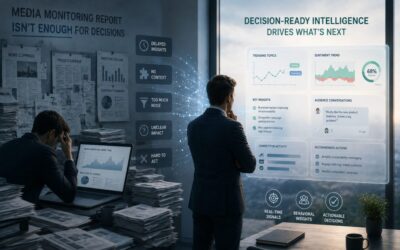

If you step inside most enterprise teams today, brand data isn’t hard to find.
There are trackers running in the background, dashboards updating continuously, and reports being shared across teams at regular intervals. On paper, it gives the impression that brand awareness is being monitored from every angle, and that nothing important should really go unnoticed.
But the moment something actually shifts in the market, the experience tends to feel different.
A campaign underdelivers, and the explanation comes slightly later than expected. A competitor starts gaining traction, and it feels like it happened faster than it should have. A category begins to evolve, and teams find themselves piecing together what changed only after it has already started affecting results.
It doesn’t show up as a single breakdown. It’s more gradual than that.
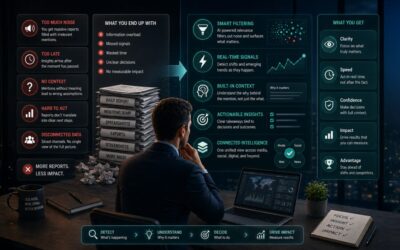
Small delays in understanding. Slight gaps in timing. Decisions that rely on signals which feel just a bit behind what’s actually happening. Over time, those gaps begin to matter more than the volume of data itself.
That’s where most brand tracking systems begin to feel limited.
Table of contents
-
- TL;DR: Best brand tracking tools
- Beyond awareness: Why most tracking falls short
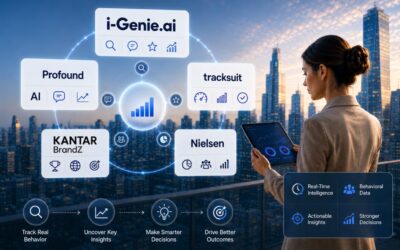
- 6 brand tracking tools compared
- A better workflow for real-time brand intelligence
- Where most teams still get it wrong
- FAQ
TL;DR: Best brand tracking tools
| Tool | Best For | Key Advantage | Limitation |
| i-Genia.ai | Enterprise Decision-Making | Behavioral Data+Real-Time Insights | Requires Mindset Shift |
| YouGov | Brand Awareness Surveys | Large Panel Data | Slower Signals |
| Kantar | Enterprise Research | Global Scale | Periodic Cycles |
| Brandwatch | Social Listening | Real-Time Mentions | Limited View of Intent |
| Meltwater | PR Monitoring | Media Tracking | Doesn’t Capture Decision Drivers |
| Riff Analytics | AI Visibility Tracking | LLM Monitoring | Narrow Scope |
When you look across these tools, the difference becomes clearer when you focus on what each one is actually capturing.
Some approaches are built around structured responses, where consumers are asked to recall or evaluate. Others work with behavior that is already unfolding across search, conversations, and reviews. Over time, that difference tends to influence how early signals become visible and how confidently teams can act on them.
Beyond awareness: Why most tracking falls short
Awareness has been a central part of brand tracking for a long time.
Teams measure it, optimize for it, and use it as a proxy for brand strength. And in many cases, it still offers useful context. But when you look more closely at how decisions are made, awareness on its own doesn’t always explain what happens next.
There are more situational factors at play.
Mental availability in real buying moments
Most purchase decisions don’t unfold as a careful comparison of brands.
They tend to happen quickly, often within a specific context where attention is limited. In those moments, people rely on what feels familiar and easy to recall. That recall is shaped gradually, through repeated exposure, relevance in certain situations, and associations built over time.
Category Entry Points help bring this into focus.
They describe the moments when a need arises, what triggers it, and which brands are mentally available at that point. When you start looking at brand performance through that lens, it becomes easier to understand why certain brands get chosen even when others are equally known.
Why surveys and NPS miss subtle movement
Metrics like NPS offer a simplified way to track sentiment.
They make it easier to summarise feedback and compare trends over time. But that simplification also removes layers of context that can be important, especially when change is gradual.
Subtle shifts don’t always show up clearly. Early signals can remain buried until they become more pronounced.
There’s also a practical limitation that tends to surface over time.
What people say when prompted doesn’t always reflect what they do in real situations. Decisions are influenced by timing, convenience, availability, and sometimes habit. These factors are harder to capture through structured responses.
That’s where the gap begins to widen.
The timing gap that builds quietly
One of the less visible challenges in brand tracking has to do with timing.
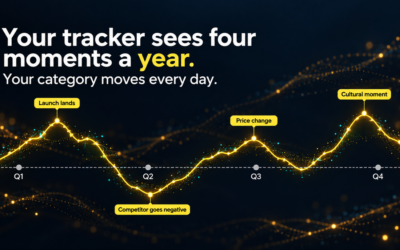
When data is collected and reported in cycles, it reflects a version of the market that has already moved forward. In isolation, each report feels current. But when you look across multiple cycles, a pattern begins to emerge.
Teams analyse what has already happened.
Decisions rely on signals that are slightly behind.
Adjustments follow once the impact becomes clearer.
Over time, this creates a rhythm where teams are consistently responding to change rather than getting ahead of it.
Six brand tracking tools compared
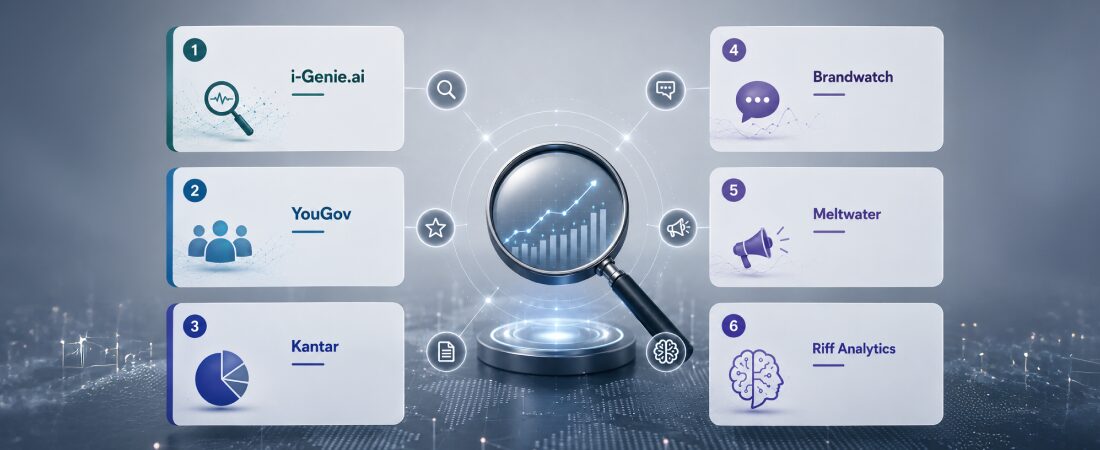
There are many tools in this space, but they tend to serve different purposes depending on how they’re built.
Looking at them through the lens of behavior and timing helps clarify where each one fits.
1. i-Genie.ai — Behavioral intelligence layer
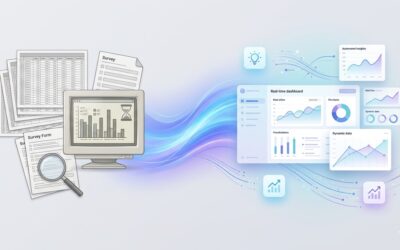
Most tools rely on collecting structured inputs at intervals.
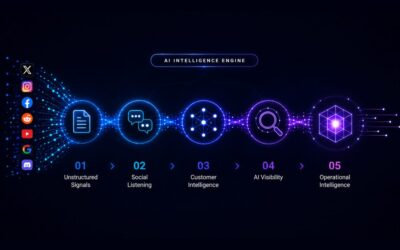
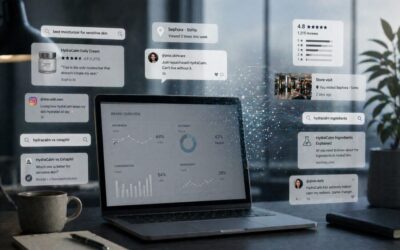
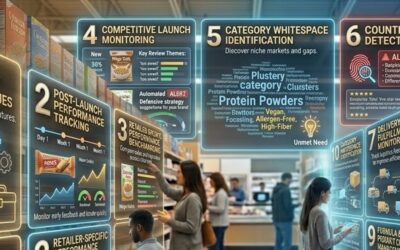
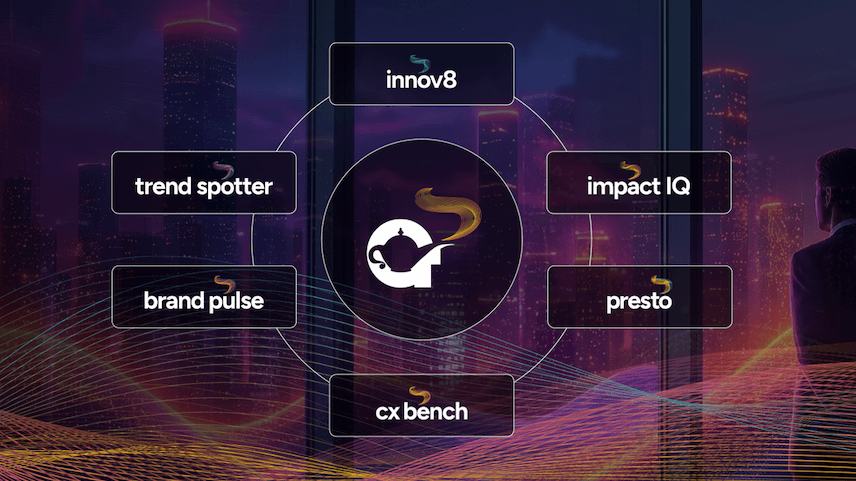
i-Genie.ai works with signals that are already being generated across the market. This includes search queries, reviews, conversations, and content across different platforms.
These signals are processed continuously, which allows patterns to surface while they are still forming. This makes it easier to spot changes in demand or perception before they become fully visible in traditional metrics.
Best for: Teams that need insight early enough to influence decisions as they happen.
2. YouGov — Structured awareness tracking
YouGov is built around panel-based data with consistent methodology.
It works well when you need comparability across time and markets. The structured approach makes it reliable for benchmarking, though the signals tend to reflect broader trends rather than early movement.
3. Kantar — Strategic research depth
Kantar brings depth and established frameworks into brand measurement.
It is often used for long-term planning and portfolio-level decisions. The insights are detailed, though they typically come through longer research cycles.
4. Brandwatch — Social listening
Brandwatch captures conversations across social platforms.
It helps teams understand what people are discussing and how sentiment is evolving. At the same time, social data tends to reflect a more vocal subset of users, which can make it harder to connect directly to overall demand.
5. Meltwater — Media monitoring
Meltwater focuses on visibility across media channels.
It provides a view of where a brand is being mentioned and how it is represented. This is particularly useful for PR teams, though it sits a step removed from actual decision-making behavior.
6. Riff Analytics — AI visibility tracking
Riff focuses on how brands appear within AI-generated responses.
As discovery shifts into these environments, this layer becomes more relevant. It adds another perspective on visibility that complements traditional tracking.
A better workflow for real-time brand intelligence

In many cases, improving brand tracking comes down to how insights are structured and used.
The shift tends to happen in stages.
1. Start with real situations
Category Entry Points help ground analysis in actual buying moments.
Looking at when needs arise, what triggers them, and how decisions unfold makes the data more tangible. It becomes easier to connect signals to real behavior.
2. Build around continuous signals
Surveys still provide useful context, but they tend to work better alongside other inputs.
A more continuous view comes from:
-
- Search behavior
- Reviews and feedback
- Ongoing conversations
These signals evolve in real time and often surface changes earlier.
3. Align insight to how teams operate
Different teams interpret data through different lenses.
Marketing looks at brand movement. Product focuses on experience gaps. Growth tracks demand signals.
When insights are structured around these needs, they are more likely to translate into action.
4. Pay attention to early patterns
The advantage comes from noticing patterns while they are still forming.
These signals are often subtle at first. They appear across different sources in small ways before becoming more visible. Being able to connect them early creates more room to respond.
Where most team still get it wrong
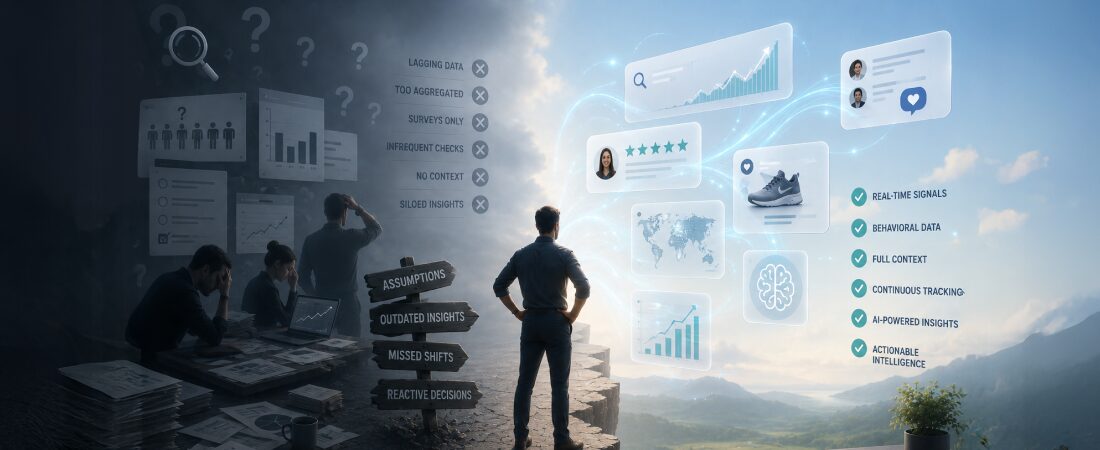
Even with better tools available, some habits take time to shift.
Mistake 1: Overemphasis on brand preference
Most customers don’t actively think about brands on a regular basis.
Their choices are shaped by familiarity, context, and availability in the moment. This makes recall in specific situations more relevant than general preference.
Mistake 2: Limited visibility into AI-driven discovery
Search is evolving into new formats.
As more discovery happens through AI-generated responses, visibility within those environments becomes part of how brands are found. This layer isn’t always captured clearly in traditional tracking.
Mistake 3: Using AI mainly for summarisation
AI is often used to make reporting faster.
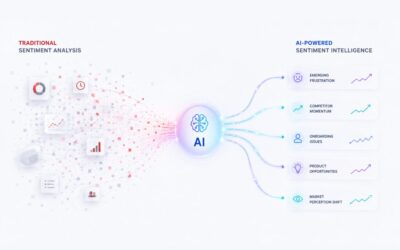
Its potential becomes clearer when it is used to connect signals, identify patterns early, and help teams move more quickly from insight to action.
Most teams today aren’t lacking access to insight
They’re working with signals that arrive slightly after the moment when they could have made the biggest difference.
As more of consumer behavior becomes visible in real time, the opportunity shifts toward working with data that stays closer to what’s actually happening.
Over time, that changes not just how brands are measured, but how decisions are made around them.