


Most teams feel like they have visibility into the market.
There are alerts running in the background, dashboards updating throughout the day, and reports arriving on a steady schedule. You can see when your brand is mentioned, where conversations are happening, and how sentiment is trending at a high level. It creates a sense that the landscape is being tracked closely.
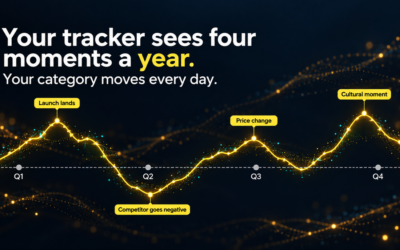
But when something meaningful begins to shift, the experience often feels slightly out of sync.
A spike appears in a report, but the conversation around it has already moved forward. Customer sentiment has taken on new nuances that aren’t immediately obvious. Competitors have started reacting in their own way. Teams find themselves piecing together what changed after the shift has already begun to take shape.
It tends to unfold gradually.
Small delays in understanding. Slight gaps in timing. Signals that feel just a bit behind the moment when they could have been most useful. Over time, those gaps become more noticeable.
That’s where many media monitoring systems start to feel limited in practice.
Table of contents
-
- TL;DR: What actually works in media monitoring
- What media monitoring captures (and what it misses)
- Why tracking mentions alone falls short
- A more useful way to track media in 2026
- How media monitoring shapes brand reputation
- Where traditional workflows start to break
- From mentions to decisions: A more practical approach
- FAQs
TL;DR: What actually works in media monitoring
| Approach | What it tracks | Strength | Limitation |
| Traditional Monitoring | Mentions, Sentiment | Visibility | Limited Context |
| Dashboard Reporting | Trends Overtime | Structure | Lagging Signals |
| Behavioral Intelligence | Search, Reviews, Conversations | Real-Time Insight | Requires shift in approach |
| Narrative Analysis | Themes and patterns | Early Detection | More involved setup |
Over time, teams start to notice that mention tracking provides a surface-level view of activity, while narrative and behavioral signals offer a clearer sense of direction. The difference becomes more apparent in how quickly insights translate into decisions.
What media monitoring captures (and what it misses)

At its core, media monitoring is about tracking where and how a brand appears across different channels.
This includes:
-
- News coverage
- Social media conversations
- Blogs and forums
- Broadcast and digital media
The process has become significantly more efficient over time. What once required manual tracking is now handled through automated systems that surface activity almost instantly.
The output, however, still follows a familiar pattern.
Most tools present mention counts, sentiment scores, and estimates of reach or impressions. These metrics provide a useful overview of what has taken place across channels, and they help establish a baseline understanding of activity.
Where things become less clear is in how those signals translate into meaning.
Movement is visible, but the reasons behind it often require additional interpretation. The relevance of that movement isn’t always obvious, and the connection to next steps can feel indirect. That’s where teams tend to pause, even when the data itself is available.
Why tracking mentions alone falls short

Looking more closely at mention tracking reveals a few patterns that show up consistently across teams.
Not all mentions carry the same weight. A brief reference in a widely read publication may generate visibility without much engagement. At the same time, a discussion in a smaller community can influence how a product is evaluated or compared.
Without context, both can appear similar in reporting.
Narrative context is often missing
Spikes appear in dashboards, but the story behind them isn’t always immediately clear.
Understanding what triggered the change, how it is evolving, and whether it connects to a broader shift takes additional effort. Without that layer, the data remains descriptive.
Noise builds over time
Keyword-based tracking brings in everything that matches a term, regardless of relevance.
As datasets grow, distinguishing between meaningful signals and background noise becomes more time-consuming.
Metrics can feel detached from engagement
Impressions and reach suggest scale, but they don’t always reflect how people are actually interacting with content.
This makes it harder to prioritise what deserves attention.
Over time, teams begin to notice a pattern where there is plenty of data available, but less clarity on how to use it effectively.
A more useful way to track media in 2026

A shift is beginning to take shape in how teams approach media monitoring.
The focus moves toward working more closely with how conversations and behavior evolve across channels.
Expanding coverage across channels
Conversations are distributed across a wide range of platforms.
They appear in:
-
- Community forums and discussion threads
- Product reviews
- Podcasts and video content
- Emerging digital spaces
Capturing a broader view makes it easier to understand how these conversations connect and influence each other.
Moving beyond fixed keywords
Keyword tracking reflects what teams expect to find.
More flexible approaches use semantic understanding to surface:
-
- Emerging themes
- New competitors
- Changing use cases
This helps reduce blind spots and brings unexpected signals into view.
Adding depth to sentiment
Basic sentiment provides a general sense of tone.
More detailed analysis distinguishes between different emotional states, such as frustration, curiosity, or trust. This creates a more nuanced understanding of how people are responding.
Breaking insights into specific areas
General feedback can be difficult to act on.
When insights are broken down into areas like pricing, onboarding, or feature usability, it becomes easier to connect them to decisions.
Working closer to real time
Timing plays an important role in how useful insights feel.
When signals are processed continuously, patterns become visible earlier in their development. Platforms like i-Genie.ai bring together data from search, social, and reviews in a way that helps teams stay closer to those shifts as they happen.
How media monitoring shapes brand reputation

Brand reputation develops through ongoing interactions in public spaces.
It reflects how people talk about products, share experiences, and respond to changes over time. Media monitoring helps surface these dynamics, especially when signals are interpreted early.
Identifying emerging concerns
Changes in sentiment often begin gradually.
Repeated feedback, similar concerns across channels, or shifts in tone can indicate patterns that are still forming.
Understanding different types of feedback
Not all criticism carries the same meaning.
Some reflects genuine customer experience. Some relates to competitive positioning. Some emerges from broader narratives that may not be directly tied to product performance.
Understanding these distinctions helps guide responses.
Recognising positive momentum
Conversations can also highlight opportunities.
Certain narratives gain traction organically. Identifying these moments early allows teams to engage and amplify them in ways that feel aligned with ongoing discussions.
Where traditional workflows starts to break

Many existing workflows were designed for a different pace of change.
As the environment evolves, certain limitations become more visible.
Surveys
They provide structured input, though:
-
- Deployment takes time
- Responses depend on recall
- Coverage is limited
Focus groups
They offer depth, though:
-
- Settings are controlled
- Scale is limited
- Behavior may differ from real-world situations
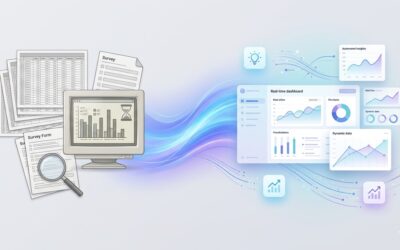
Static dashboards
They centralise data, though:
-
- Signals reflect past activity
- Interpretation requires additional effort
- Action is not always built in
At the same time, continuous feedback is being generated through everyday interactions.
Working more closely with these signals changes how quickly teams can understand and respond.
From mentions to decisions : A more practical approach

As teams start reworking how they use media monitoring, the shift doesn’t usually happen all at once.
It begins with a change in how signals are interpreted, and then gradually moves into how those signals are structured, shared, and acted upon across the organisation. Over time, the focus moves closer to understanding change as it develops, rather than reviewing it after it has already settled.
A more useful workflow tends to take shape in stages.
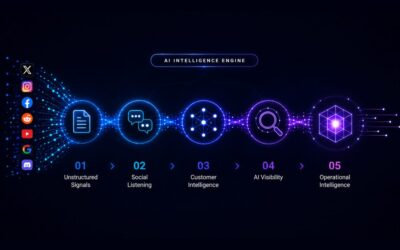
Step 1: Capture signals across the full landscape
The first step is expanding what counts as relevant input.
Most teams already track social media and news coverage, but a large part of the conversation happens outside these channels. People discuss products in community forums, leave detailed feedback in reviews, compare options in comment sections, and increasingly engage through video and audio formats.
When these sources are included, the picture becomes more complete.
What starts to emerge is not just isolated mentions, but a network of conversations that connect across platforms. A concern raised in a review may reappear in a forum discussion. A feature comparison may show up in search queries. Seeing these connections helps move from fragmented signals to a more cohesive understanding.
Step 2: Add context, not just classification
Once signals are captured, the next layer involves interpreting them with more depth.
Basic sentiment classification provides a general sense of tone, but it often groups very different experiences under the same label. A frustrated user and a mildly disappointed one may both appear as “negative,” even though the implications are quite different.
Adding context means looking at:
-
- The intensity of the response
- The underlying reason behind it
- The situation in which it appears
Over time, patterns begin to form.
You start to notice recurring themes, similar concerns expressed in different ways, or consistent points of friction that show up across channels. This is where the data begins to feel more grounded in real experience.
Step 3: Identify patterns as they begin to connect
Individual signals are useful, but their value increases when they are viewed together.
Patterns rarely appear all at once. They tend to emerge gradually, across different sources, before becoming more widely visible. A small increase in competitor comparisons, a rise in specific feature complaints, or a shift in how a product is described can all point to something forming beneath the surface.
When these signals are connected early, they provide a clearer sense of direction.
Instead of waiting for a trend to become obvious, teams begin to see where attention is moving, how perception is evolving, and which areas may require closer attention.
Step 4: Translate insight into team-level action
Insights become useful when they are placed in the context of decisions.
Different teams interact with the same signals in different ways. What matters for a product team may look different from what matters for marketing or customer experience.
For example:
-
- A rise in onboarding confusion may indicate a product usability issue
- Increased comparison with a competitor may signal positioning challenges
- Repeated pricing concerns may affect both product and sales strategy
When insights are routed to the right teams with this context, they are easier to act on.
Instead of a central report that requires interpretation, the signal arrives closer to the point where decisions are made.
Step 5: Track how patterns evolve over time
Understanding a signal at one point in time is useful. Seeing how it develops adds another layer of clarity.
Some patterns grow steadily. Others appear briefly and fade. Some shift direction as new information enters the conversation.
Tracking these movements helps teams understand:
-
- Whether an issue is stabilising or escalating
- How competitor positioning is changing
- Which narratives are gaining traction over time
This also creates a feedback loop.
Teams can see how their actions influence the conversation, whether changes are having the intended effect, and where further adjustments may be needed.
Step 6: Stay close to the signal, not just the report
As this workflow matures, the role of reporting begins to change.
Instead of being the primary way insights are consumed, reports become one of several ways to view ongoing signals. The emphasis shifts toward staying connected to how conversations and behaviors evolve in closer proximity to real time.
This is where platforms like i-Genie.ai start to feel different in practice.
They bring together signals across search, social, and reviews, and surface patterns as they begin to form. This allows teams to engage with changes while there is still room to respond, rather than reconstructing them later.
Over time, this approach changes how media monitoring is used across the organisation.
It becomes less about tracking activity and more about understanding movement. And that shift influences not just how data is collected, but how decisions are made from it.
Most teams today are working with a substantial amount of information about their market
What becomes more noticeable over time is how that information aligns with the pace of change. Signals appear, though often with a delay that only becomes clear in hindsight, once outcomes are already visible.
As more of consumer behavior becomes observable in real time, expectations begin to shift alongside it.
The role of media monitoring gradually evolves toward helping teams stay closer to those signals, understand them earlier, and act while they are still taking shape.