
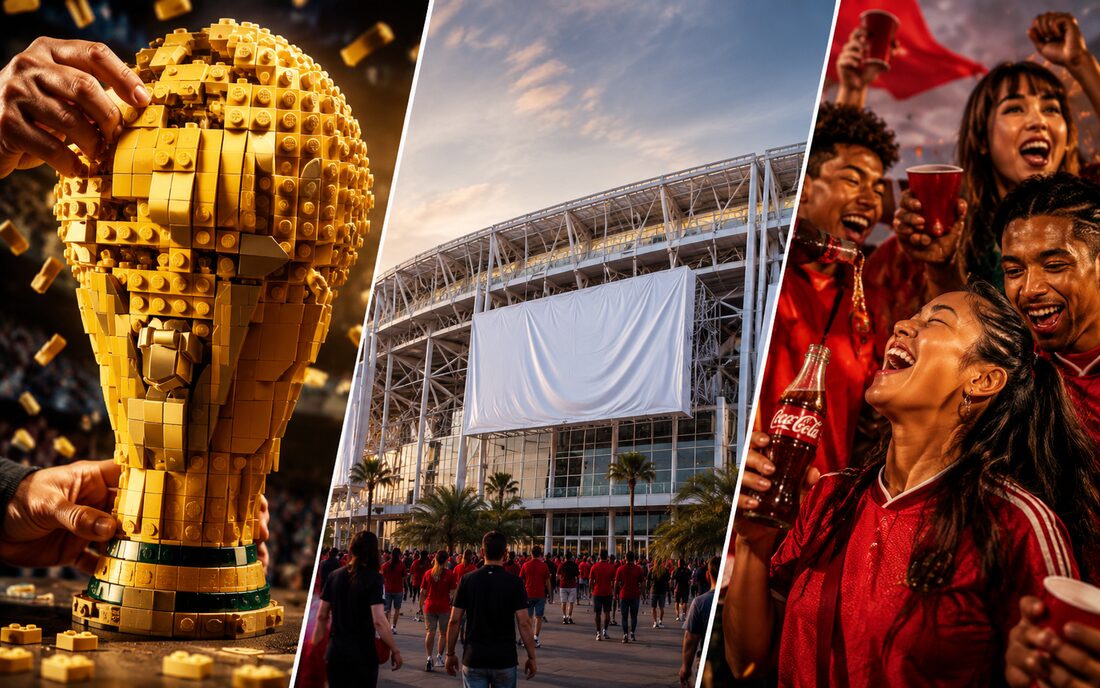
Since the 2026 World Cup kicked off, brands have poured a record $2.8 billion into official sponsorship rights. But the real story is a simple one: a FIFA badge buys visibility, not relevance. The brands topping the table are the ones treating the tournament as a story to tell, not a logo to plant.
Sponsorship secures visibility, but storytelling wins relevance: How Adidas overtook Coca-Cola
Coca-Cola and Adidas, two of FIFA’s Tier 1 (T1) sponsors, won through narrative, not noise.
In the months leading up to the tournament, Coca-Cola took the biggest share of social Buzz among T1 sponsors in the US alone (Buzz being our overall metric for mentions across social media, search and reviews). Their “FIFA Trophy Tour” leaned into the tournament’s legacy that fans and non-fans know, capturing 86.3% of Buzz share among T1 sponsors in February, 51.6% in March, and 45.2% in April – a run that took them from just over 39,000 social engagements in December to 1.9 million at the Tour’s launch in January.
Then the momentum shifted. Coca-Cola saw Buzz share among T1 sponsors drop sharply to 22.3% in May, and engagement fell to 0.7 million (despite a spike in June, when the Trophy landed in key cities where matches happened), just as Adidas raised its game: unveiling team kits and dropping its star-studded “Backyard Legends” film, fronted by Timothée Chalamet, Bad Bunny, Lionel Messi, Jude Bellingham, and Lamine Yamal, among others. Adidas claimed 49.5% of Buzz share among top sponsors in May, a 20.4% jump versus April, with engagement climbing from 0.8 to 2 million.
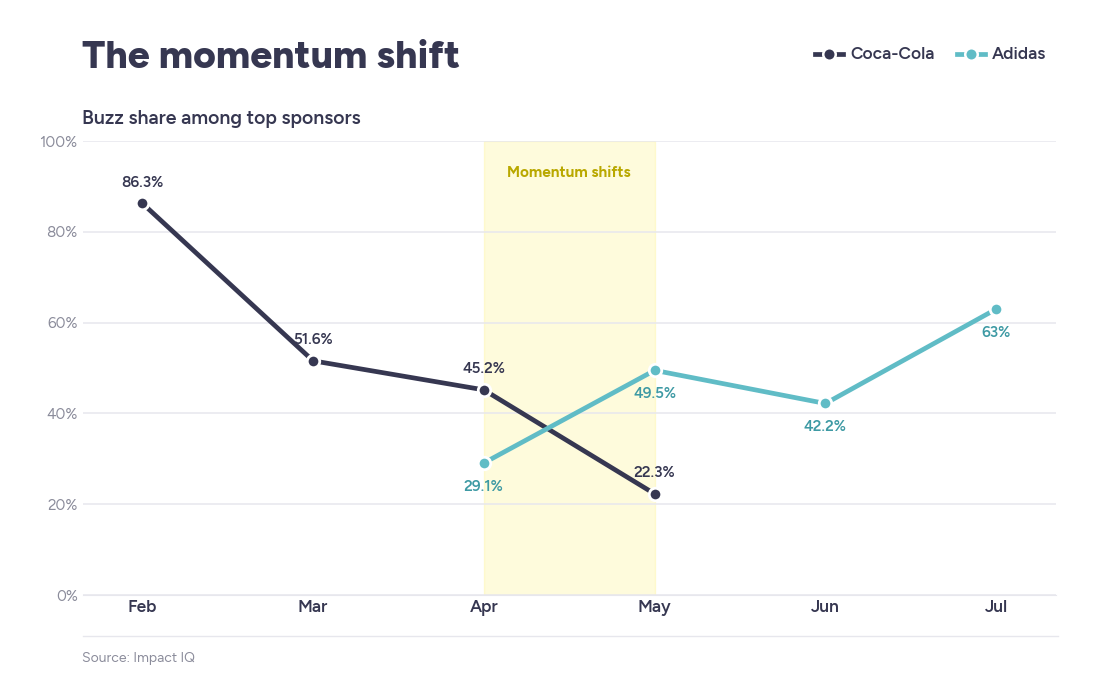
In June, when Messi posted his own “El Último Tango” boots, a nod to his final World Cup, Adidas kept the momentum going: 42.2% of social Buzz and 18.2 million engagements, in the US alone. By July, it surged to 63% of Buzz share among top sponsors and 18.7 million engagements.
Both brands won by tapping into fans’ emotional connection to the World Cup’s history and its players. But Adidas was the sharper shooter among all the official sponsors. The narrative of their film fittingly echoes the rise to fame of many players that fans hold onto dearly, without pitching a product or logo.
Sponsorship rights matter less when fans can own the moment: How McDonald’s and LEGO scored big
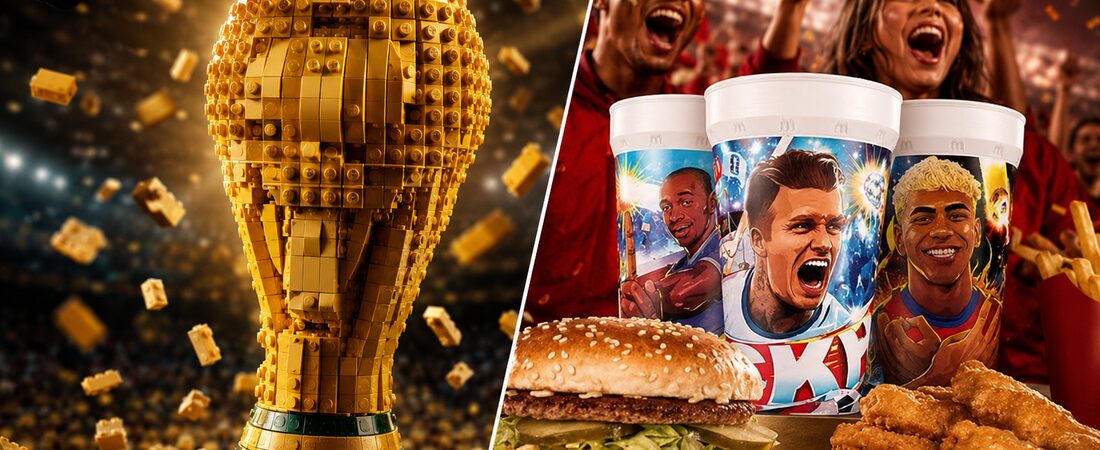
Taking things off the pitch and into people’s homes, McDonald’s stood out among official sponsors with its collectible World Cup Meal cups – an accessible way for fans to feel and own a part of the tournament. The simple campaign drove an estimated 11.7 million social engagements in June, up from just 0.3 million in May, though settling at 4.2 million in July.
Now for the shock result: a similar route to McDonald’s, enabling fans to own part of the tournament, LEGO, which didn’t hold a single product category at this World Cup, produced some of the biggest social numbers of the tournament. Its clip of Messi, Ronaldo, Mbappé, and Vini Jr. building the buyable official LEGO trophy generated 28.9 million social engagements in the US alone in April. Coca-Cola may have led the Buzz share among official sponsors in April leading up to the tournament, with Adidas closing in behind, but bring LEGO into the mix, and it took the win outright, capturing 79.7% of Buzz share across that month. That left the “official” contenders trailing well behind: Coca-Cola at 9.2% and Adidas at 5.9%.
What’s the lesson here? Perhaps fans don’t just want to watch the World Cup. They want a piece of it and feel a sense of ownership, and the brands like McDonald’s and LEGO that offer a way to access this win, sponsorship rights or not.
Levi’s proved that brand recognition can be more powerful than offical sponsorship
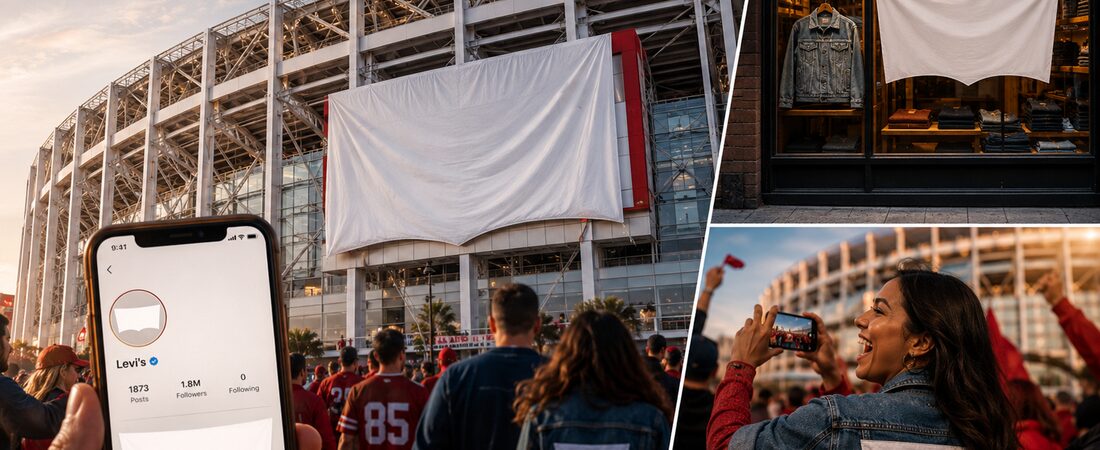
The best marketing story of the tournament belongs to a brand that never paid FIFA, or any football name, a single penny.
FIFA’s clean-venue rules forced Levi’s Stadium in Santa Clara to cover its batwing logo with a white tarp and play under the name “San Francisco Bay Area Stadium”. But thanks to the brand’s legacy, the shape stayed instantly recognisable anyway. Levi’s leaned straight into the irony: swapping its Instagram profile picture for the covered logo, then draping the same white sheet over storefronts in Paris, London, Mexico City, and Hong Kong.
The results left official partners trailing. According to JP Morgan analyst (via StadiumDB.com), by mid-June, Levi’s had reached 158 million people – outscoring Adidas, Coca-Cola, and McDonald’s, despite not being a sponsor at all. CMO Kenny Michell (via Investing.com) saying engagement rose more than 400%, and the campaign drew over 500 million impressions in total. Heinz followed suit shortly after, with a blacked-out “Unofficial Stadium Ketchup” bottle of its own.
And this isn’t the first time FIFA’s strict brand-policing has backfired. In 2006, a fan was made to remove his trousers because they read “Bavaria” instead of the official sponsor Budweiser. Word spread that the fan watched the game in their underwear… In 2014, Sony, the official sponsor, sent free headphones to every player, banning other others from events. But off-camera, on the training ground, the bus, the tunnel, where FIFA couldn’t control them, players kept wearing Beats by Dre anyway. Beats capitalised on the moment with a five-minute advert of its own.
This is authenticity that you can’t buy. The best reactions can’t be bought, and sometimes the smartest move is acting fast and knowing when to play along.
What your brand should take away to plan for success
Three lessons to bring back to your own game plan:
-
- Lead with story, not logos. Spend your budget on a narrative people want to share, not on plastering your badge where it will be ignored.
- Know what fans want. You have to know your audience. By giving them what they want, they’ll give you attention in return.
- Watch for the open goal. The biggest wins go to whoever moves first, not whoever paid the most. Building brand recognition takes time but it pays off when the moment arrives.
Want to spot the moment before your competitors do?
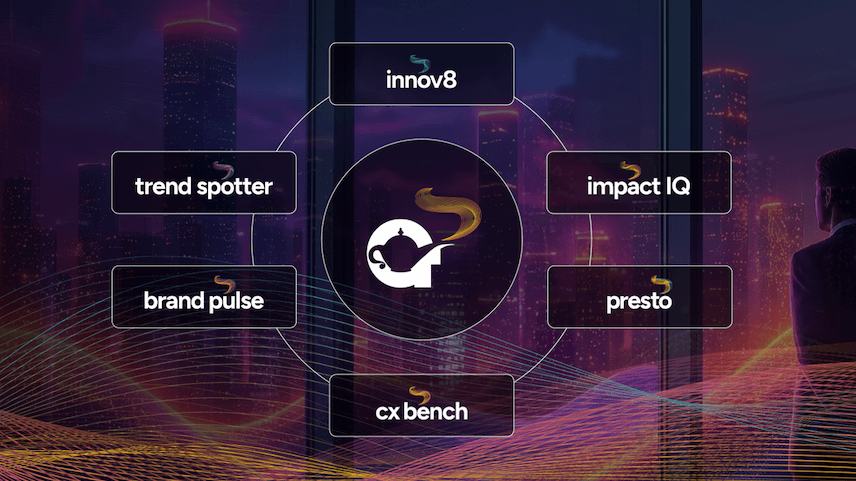
The brands that won this tournament read the cultural signals early and built for what audiences actually cared about. i-Genie.ai turns the digital signals your customers leave behind, across search, social and reviews into real-time insight with Impact IQ, so you can see what your market wants and act while it still counts. Learn more about how i-Genie.ai can track how your brand’s doing.
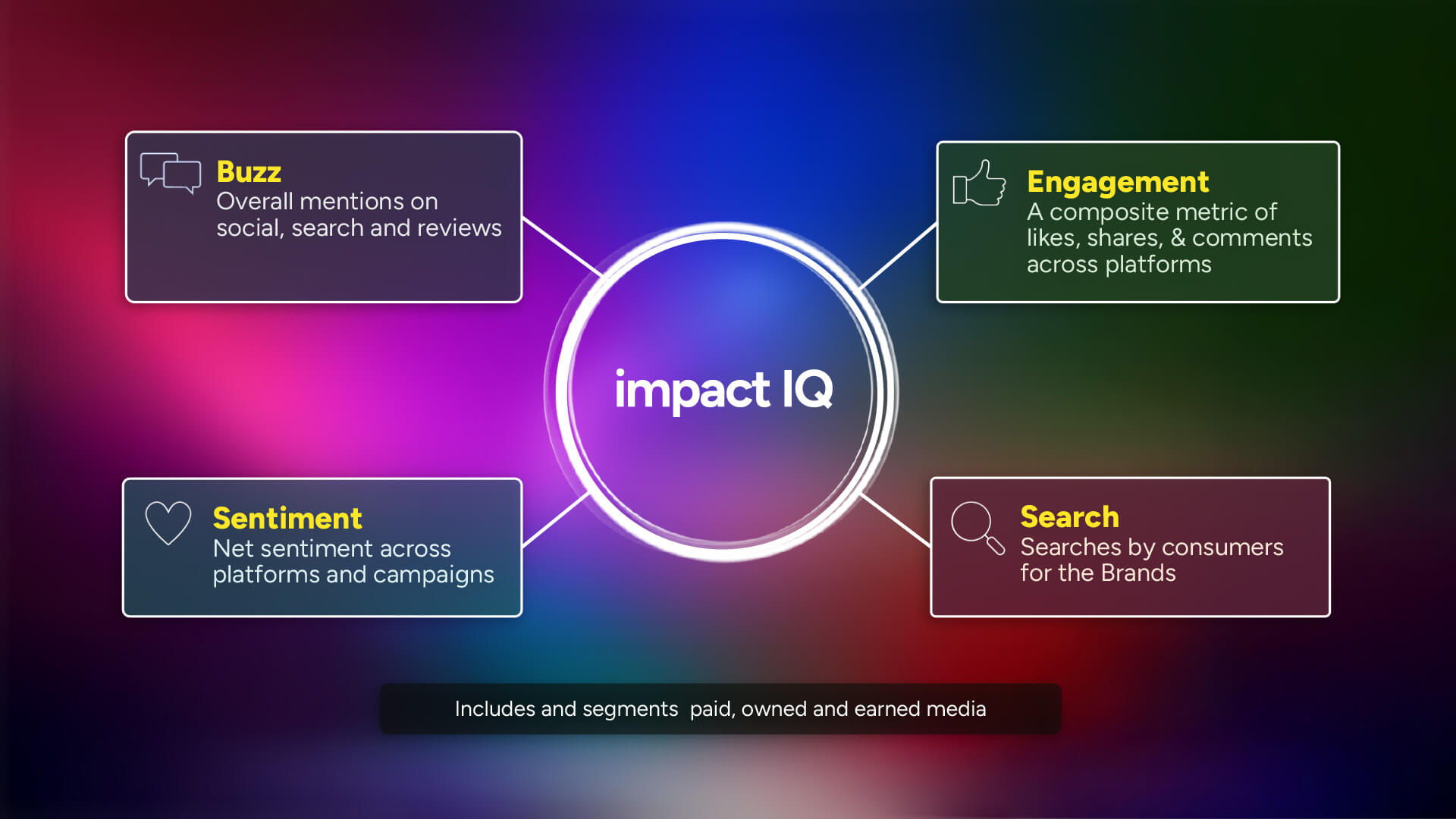
*Statistics sourced from our social Buzz tracking tool, based on data captured the week of 20th July 2026.